

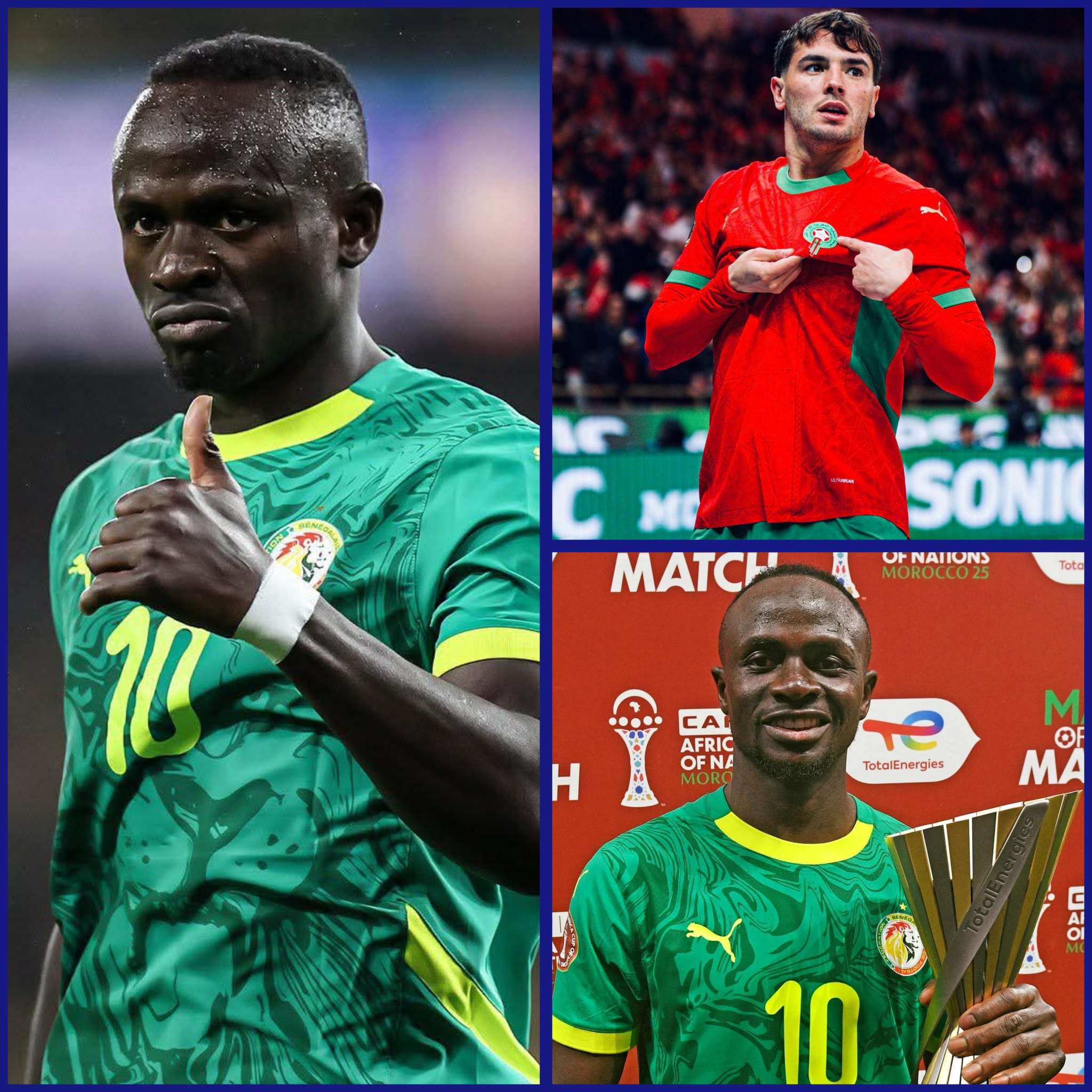
The aftershocks of the most controversial Africa Cup of Nations in history continue to reverberate, with reports emerging that the Confederation of African Football has demanded that Senegalese captain Sadio Mané return his Best Player of the Tournament award.
According to sources, CAF intends to reallocate the individual honor to Moroccan playmaker Brahim Díaz, following the same regulatory logic that stripped Senegal of the continental title.
Sadio Mané, however, has reportedly refused, delivering a defiant response that echoes his teammate Kalidou Koulibaly’s earlier rejection of the forfeited trophy. “I won it on the pitch, not in the boardroom. The Al-Nassr forward is said to have declared, framing the dispute as a fundamental clash between sporting merit and administrative fiat.
The Individual Award at Stake
Sadio Mané was named the TotalEnergies AFCON Best Player following Senegal’s 1-0 extra-time victory over Morocco in the January 18 final. The award recognized a tournament in which the Liverpool legend captained his side to continental glory, scoring crucial goals and providing leadership that guided the Teranga Lions through a challenging campaign.
His performances throughout the competition—including in the semifinal against Nigeria and the final against Morocco—were widely acclaimed as deserving of the honor. The Best Player award, like the champions’ trophy, was celebrated in Dakar as recognition of Senegalese football excellence.
The Regulatory Logic
CAF’s reported demand rests on the same legal foundation as the decision to strip Senegal of the title. Following Senegal’s walk-off during the final—when players briefly left the pitch after a stoppage-time penalty was awarded to Morocco—CAF’s Appeal Board ruled that the team had forfeited the match under Articles 82 and 84 of the competition regulations.
That ruling awarded Morocco a 3-0 victory and declared Senegal the loser of the final. By that same logic, sources suggest, CAF argues that Senegal’s players cannot retain individual awards earned in a match they are deemed to have lost by forfeit.
If the match result is officially recorded as a 3-0 Moroccan victory, then, according to CAF’s interpretation, the Best Player recognition for that match, and by extension the tournament, should accrue to the winning side.
Mané’s Refusal
The Senegalese captain, who remained on the pitch attempting to calm tensions while his teammates retreated to the dressing room during the chaotic final, has reportedly made his position unmistakably clear.”I won it on the pitch, not in the boardroom.
Mané is said to have told CAF officials, drawing a sharp distinction between on-field achievement and administrative decision-making. His stance mirrors that of Hakimi, the Moroccan defender who publicly rejected the team trophy awarded to his country, insisting Senegal had won fairly.
Where Hakimi refused a trophy his country had been granted, Mané now refuses to surrender one he earned through his performances. Together, the two stars have become unlikely allies in defending the integrity of the tournament against the very body that governs it.
Trophy in Military Custody
Adding a surreal layer to the saga, reports indicate that Mané’s Best Player award is currently in the custody of the Senegalese Armed Forces. The trophy was reportedly entrusted to military authorities for safekeeping amid concerns that CAF might attempt to reclaim it by force or legal means.
The involvement of the Senegalese military underscores the depth of feeling in the West African nation, where CAF’s rulings are viewed not merely as sporting decisions but as matters of national pride. For Senegal, the AFCON title won on the pitch represents a historic achievement that no administrative ruling can erase from the collective memory.
Díaz’s Silence
Brahim Díaz, the Moroccan playmaker who would be the beneficiary of any reallocation, has not commented on the reports. The Real Madrid loanee was instrumental in Morocco’s tournament run and was the player fouled for the controversial stoppage-time penalty that triggered the Senegalese walk-off.
Whether Díaz would accept the Best Player award if offered remains an open question. His teammate Hakimi’s rejection of the team trophy may set a precedent, suggesting that many Moroccan players share a preference for winning through performance rather than legal decision.
CAF’s Position
CAF has not issued an official statement on the reported demand, and it remains unclear whether the organization intends to pursue the matter formally. The Confederation is already facing intense scrutiny over its handling of the post-final disciplinary process, with Senegal having announced an appeal to the Court of Arbitration for Sport.
The CAS case challenges the entire regulatory framework that stripped Senegal of the title. If Senegal prevails, CAF’s decision to demand individual awards back would become moot. If the CAS upholds CAF’s ruling, the Confederation may face the awkward prospect of enforcing individual award returns against players who have made clear their contempt for the decision.
A Crisis of Legitimacy
The Mané-Díaz dispute represents the most visible symptom of a broader crisis facing CAF. The Confederation’s handling of the AFCON aftermath has alienated players, federations, and fans across the continent. By pursuing regulatory rulings that contradict what millions witnessed on the pitch, CAF risks undermining the very credibility it seeks to protect.
For Mané, the Best Player award represents something beyond silverware. It stands as recognition of his leadership, his quality, and his role in delivering Senegal’s second continental title. Having won it through performances that no ruling can erase, his refusal to surrender it carries the weight of a principle: that football’s true honors are earned where they always have been—on the field of play.
What Comes Next
As the CAS prepares to hear Senegal’s appeal, both the team trophy and individual awards remain in limbo. Morocco’s football federation continues to claim the continental title, while Senegal insists it will never accept CAF’s ruling.
Achraf Hakimi has rejected the team trophy on principle, and Mané now refuses to return his individual honor.In this extraordinary standoff, one thing becomes increasingly clear: CAF’s regulatory victory may prove pyrrhic.
When the best players on both sides reject the outcomes the Confederation has engineered, the governing body’s authority is called into question. For African football, the path forward requires not legal rulings but a restoration of trust—a task made infinitely harder by the very processes meant to resolve the dispute.