

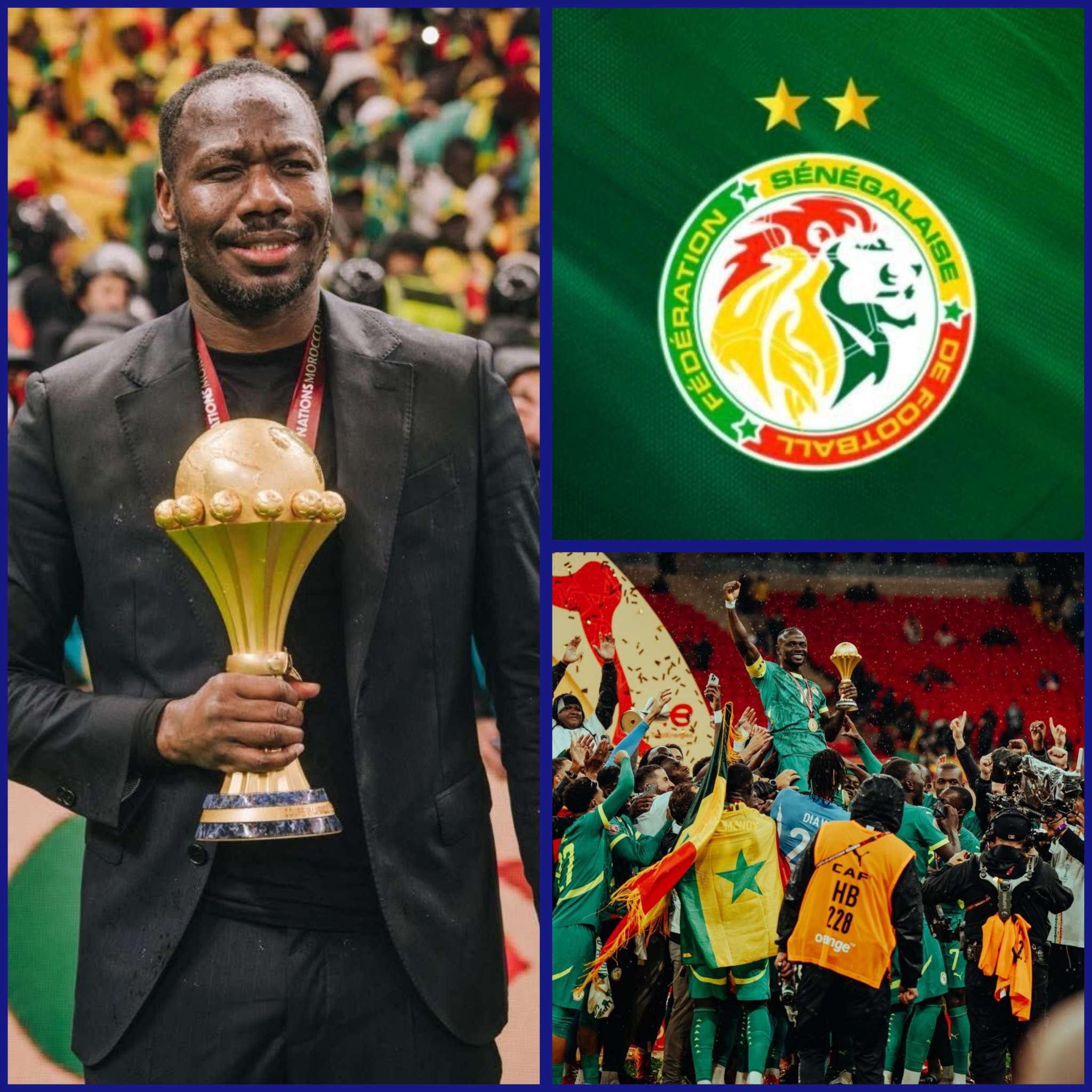
The Court of Arbitration for Sport (CAS) has officially confirmed receipt of an appeal from the Senegalese Football Federation (FSF) challenging the Confederation of African Football’s (CAF) controversial decision to strip the Teranga Lions of their 2025 Africa Cup of Nations title and award it to Morocco.
The legal move marks the latest chapter in one of African football’s most bitter and unprecedented disputes.In a statement released on Wednesday, CAS confirmed that Senegal had formally initiated proceedings against CAF, requesting that the ruling of the CAF Appeal Board which declared Senegal had forfeited the final and handed a 3-0 victory to Morocco be overturned. The Senegalese federation is seeking the reinstatement of their on-field victory, which was secured in extra time on January 18, 2026.
A Request for Fair Process
Alongside the substantive appeal, Senegal has submitted a request for the immediate suspension of the deadline to file their full appeal brief. The FSF argues that they cannot properly formulate their case until CAF provides the complete grounds and reasoned decision behind the Appeal Board’s ruling, documentation that has not yet been made available.”Without the full reasoning, we are essentially arguing in the dark.
A source close to the Senegalese federation told reporters. “How can we challenge a decision when the basis for that decision has not been fully disclosed?”The request is procedurally significant. Under normal CAS rules, appellants must submit their full brief within a specified timeframe.
Senegal’s argument—that the deadline should be suspended until they have the necessary documentation to mount a proper defense has precedent in cases where one party delays disclosure of critical materials.
CAF’s Position
CAF has not yet publicly responded to the CAS filing. The Confederation has maintained that its Appeal Board acted within the framework of competition regulations, specifically Articles 82 and 84, which govern team forfeiture and abandonment of matches.
According to the Appeal Board’s ruling, Senegal’s decision to temporarily walk off the pitch during the final after a stoppage-time penalty was awarded to Morocco, constituted a forfeiture of the match, triggering the automatic 3-0 scoreline.
The ruling came more than two months after the final, sparking widespread criticism from across the football community.
The Original Dispute
The chaos unfolded on January 18, 2026, during the AFCON final in Rabat. With the score 0-0 in second-half stoppage time, Congolese referee Jean-Jacques Ndala awarded Morocco a penalty following a VAR review.
Senegalese players and coaching staff erupted in protest, with head coach Pape Thiaw ushering his team off the field. After approximately 17 minutes, Senegal’s players returned reportedly at the urging of captain Sadio Mane, who had remained on the pitch trying to calm tensions.
When play resumed, Morocco’s Brahim Diaz saw his “Panenka” penalty saved by Senegalese goalkeeper Edouard Mendy. Pape Gueye scored the winner in extra time, and Senegal celebrated their second AFCON title in five years.
The celebration lasted two months. On March 17, CAF’s Appeal Board announced its ruling: Senegal had forfeited the match, Morocco were champions, and history had been rewritten.
Fallout and Reactions
The decision has been met with defiance from both sides. Moroccan defender Achraf Hakimi publicly refused the trophy awarded to his country, stating that Senegal had won fairly and that he would not accept a title decided in a boardroom.
Senegalese captain Sadio Mane has reportedly refused to return his Best Player of the Tournament award, declaring he won it “on the pitch, not in the boardroom.
Former France international Samir Nasri blasted CAF’s timing, saying a decision made on the night might have been understandable but that waiting two months makes no sense and affects the credibility of African football. Nigerian defender William Troost-Ekong argued that once both sides agreed to continue playing, the result should stand.
Legal Stakes
The CAS appeal represents Senegal’s most significant legal challenge yet. Should the court rule in Senegal’s favor, the original result would be restored, and the Teranga Lions would reclaim their title. Should CAS uphold CAF’s ruling, Morocco’s status as champions would be confirmed though the lingering sense of a tarnished victory may never fully dissipate.
The stakes extend beyond the two nations. The case will test CAF’s regulatory authority and its ability to enforce competition rules in a manner consistent with the expectations of players, federations, and fans. It will also set precedent for how such incidents are handled in the future.
The Road Ahead
The timeline for CAS proceedings remains unclear. Senegal’s request for a deadline suspension will be decided in the coming days. If granted, the federation will have additional time to prepare its full case once CAF provides the complete grounds for its decision.
If denied, Senegal must proceed with the information currently available.CAS typically hears appeals on an expedited basis when they involve matters of immediate importance, such as title determinations. A final ruling could come within months, though the complexity of the case may extend the timeline.
A Waiting Game
For fans of both nations, the wait continues. Senegal’s supporters believe their team’s rightful victory is being stolen. Morocco’s supporters believe the rules were applied correctly. Both sides have legitimate arguments, and both feel aggrieved.
What is clear is that this dispute has moved beyond the football pitch. It is now a legal battle, one that will determine not only who holds the trophy, but what principles govern African football when the rules collide with the spirit of the game.
As the case moves to Switzerland, the football world watches, waiting to see if the Court of Arbitration for Sport can resolve what CAF could not