

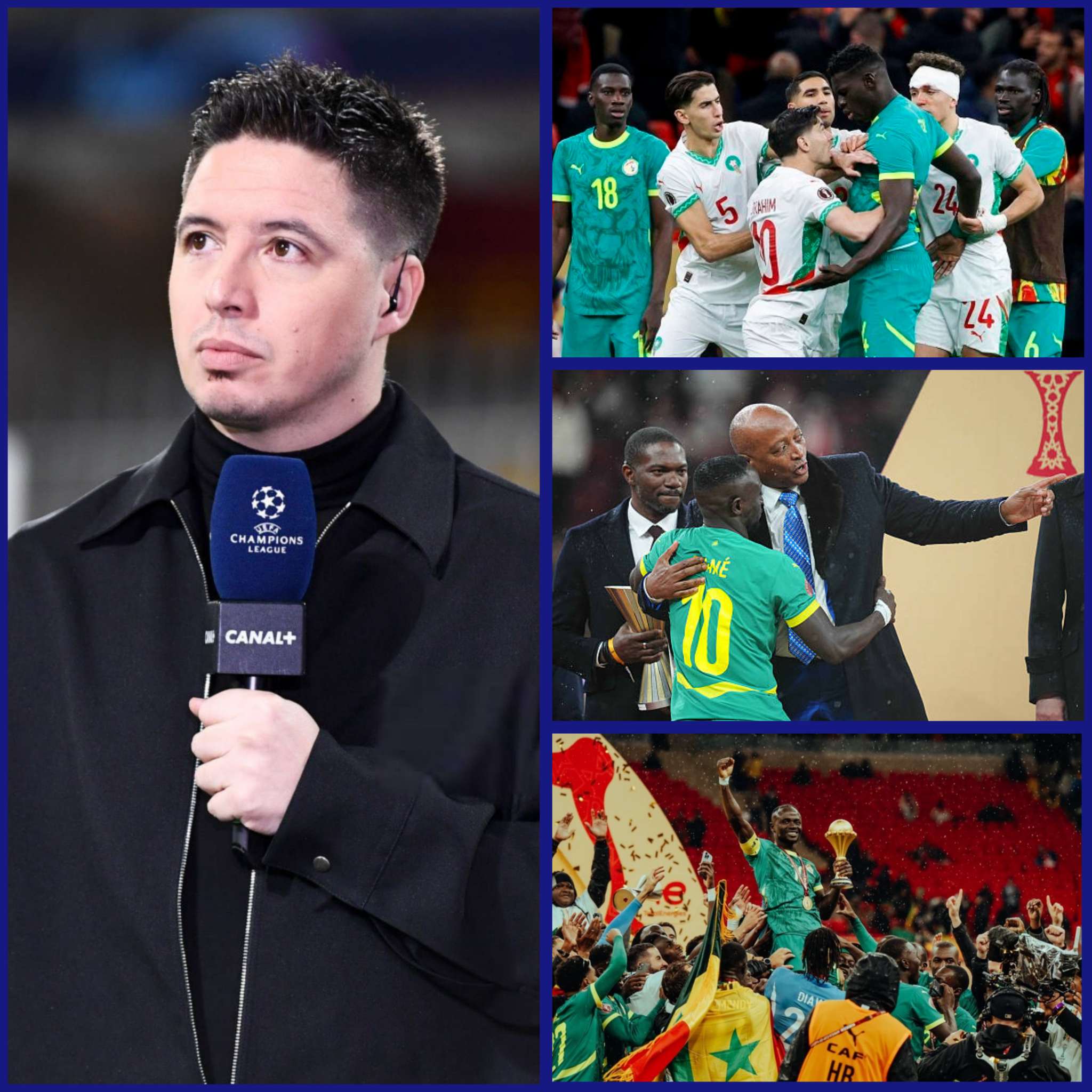
Former France international Samir Nasri has launched a scathing critique of the Confederation of African Football (CAF) over its handling of the Africa Cup of Nations controversy, adding his voice to the growing chorus of football figures questioning the organization’s decision to strip Senegal of the title and award it to Morocco.
The former Arsenal and Manchester City midfielder, who is of Algerian descent and has deep connections to African football, did not hold back in his assessment of a ruling that has divided the continent and sparked unprecedented debate about the integrity of the competition.
Timing Is Everything
Samir Nasri’s central argument focused on the timing of CAF’s decision, which came more than two months after the chaotic final between Senegal and Morocco. If they made the decision on the night of the final or the next day, we might understand,” Nasri said, acknowledging that immediate action would have been at least comprehensible, even if controversial.
But now? It makes no sense.”His frustration reflects a widespread sentiment across the football community: that waiting two months to overturn a result that was decided on the pitch, after both teams agreed to resume play and complete the match, fundamentally undermines the credibility of the process. By the time CAF’s Appeal Board issued its ruling, Senegal had already celebrated, players had been honored, and the tournament was long concluded.
A Blow to African Football’s Credibility
Samir Nasri’s second point cut to the heart of concerns that extend far beyond the specific dispute between Senegal and Morocco.”It affects the credibility of African football,” he stated plainly, articulating what many players, coaches, and fans have been saying since the ruling was announced.
For Nasri, the issue transcends the two nations involved. The former France international, who represented his country at three European Championships and two World Cups, understands how such controversies are perceived on the global stage.
A continent already fighting for respect and recognition in the world football hierarchy, he suggested, cannot afford governance decisions that appear to prioritize regulatory technicalities over sporting integrity.
A Player’s Perspective
Samir Nasri’s intervention carries weight because of his unique position. Though he represented France internationally, his Algerian roots give him a personal connection to African football that many European-based players lack.
He has long spoken about his affection for the African game and has followed its development closely. His comments echo those made by players directly involved in the controversy. Moroccan defender Achraf Hakimi publicly refused the trophy awarded to his country, insisting Senegal won fairly.
Nigerian captain William Troost-Ekong argued that once both teams agreed to continue playing, the result should stand. Senegalese star Sadio Mané has reportedly refused to return his Best Player award, declaring he won it “on the pitch.
The Credibility Crisis
Nasri’s reference to credibility speaks to a deeper anxiety within African football. The Confederation has worked for decades to elevate the Africa Cup of Nations to its current status as one of the world’s most watched and competitive continental tournaments.
But decisions like this, critics argue, threaten to undo years of progress.When a championship is awarded months after the final whistle, based on a regulatory interpretation rather than the outcome of the match, questions inevitably arise about the legitimacy of the result. For casual observers, the narrative becomes not about the quality of play or the drama of competition, but about administrative dysfunction.
A Broader Pattern?
Some observers see the AFCON controversy as part of a broader pattern of governance issues that have periodically plagued CAF. The Confederation has undergone significant leadership changes and reform efforts in recent years, but incidents like this suggest that challenges remain in balancing regulatory enforcement with the fundamental principles of sporting competition.
Nasri’s critique suggests that in this case, CAF got the balance wrong—and that the damage extends beyond the two nations directly affected.
What Comes Next
As Senegal prepares to take its case to the Court of Arbitration for Sport, Nasri’s words will resonate with those who believe that football’s outcomes should be determined on the field, not in hearing rooms.
Whether CAS upholds CAF’s ruling or restores Senegal’s title, the damage to the tournament’s credibility may already be done.For Nasri, the message is clear: African football deserves better. A continent that produces some of the world’s most exciting players and passionate fans should not have its premier competition tainted by decisions that, as he put it, simply “make no sense.
His critique joins a growing body of opinion from within the football community that CAF’s handling of the AFCON aftermath has been a self-inflicted wound—one that will take time, and perhaps legal intervention, to heal.