

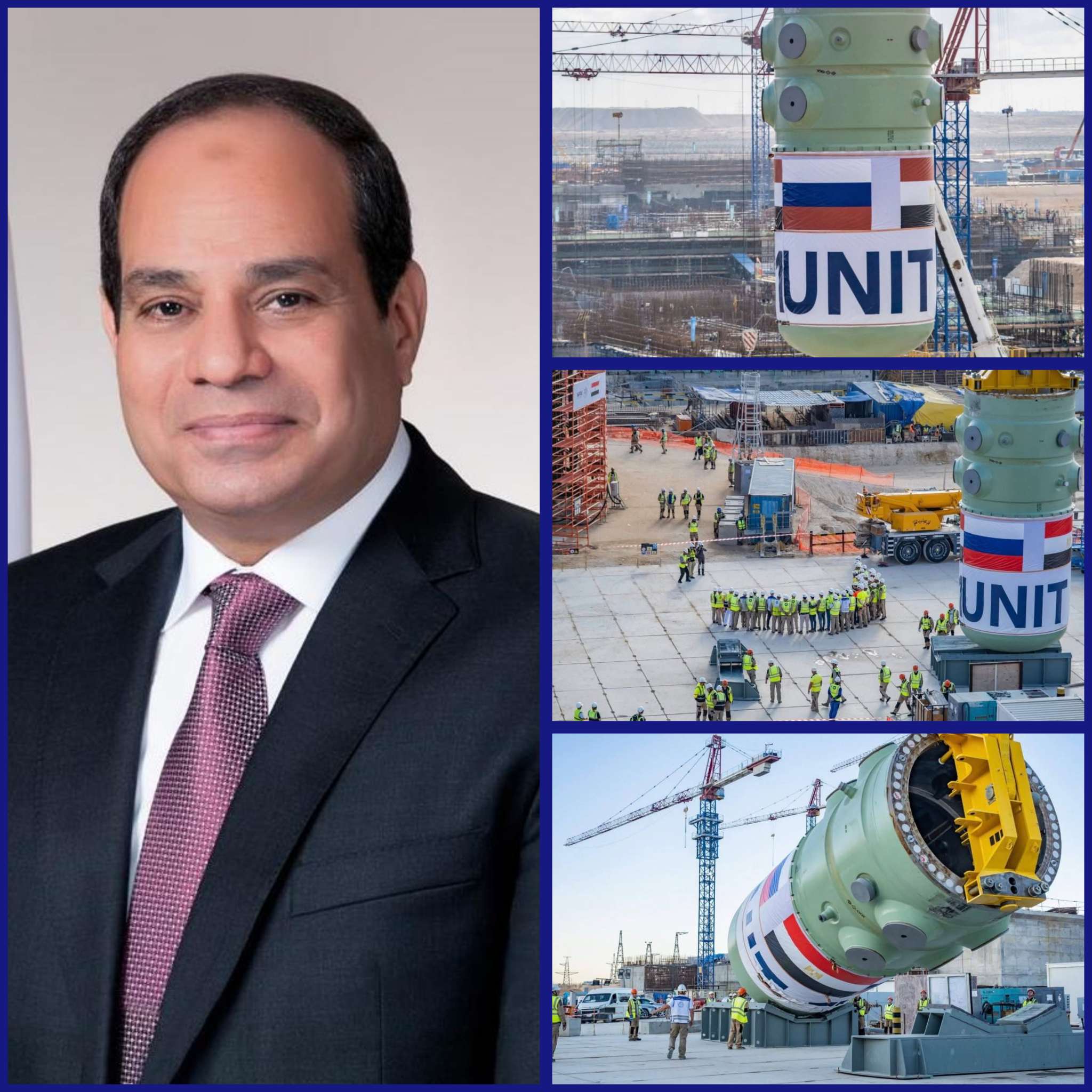
Egypt is cementing its position as a continental energy leader with the construction of the El Dabaa Nuclear Power Plant, Africa’s largest nuclear facility. Located near the Mediterranean coast, approximately 300 kilometers northwest of Cairo, the $30 billion project represents a historic step for both Egyptian energy independence and African industrial development.
A Colossal Energy Undertaking
The facility will consist of four Generation III+ VVER-1200 reactors supplied by Russia’s State Atomic Energy Corporation, Rosatom. Each reactor has a capacity of 1,200 megawatts (MW), bringing the plant’s total generation capacity to 4,800 MW .
Once operational, the plant is expected to generate approximately 37 billion kilowatt-hours annually, meeting up to 10% of Egypt’s electricity needs and serving an estimated 25 million people.
Construction commenced in July 2022 with the first concrete pour for Unit 1. Units 2, 3, and 4 followed in November 2022, May 2023, and January 2024 respectively . The first reactor is scheduled to begin commercial operations in 2028, with full completion of all four units targeted for 2029–2030.
Russian Financing and Support
The project is financed primarily by Russia, which is providing 85% of the $30 billion cost—approximately $25 billion—through a low-interest state export loan . The loan is repayable over 22 years at an interest rate of about 3% .Under the contractual agreement signed in December 2017, Rosatom’s responsibilities extend far beyond construction.
Russia will supply nuclear fuel throughout the plant’s entire 60- to 80-year lifecycle, train Egyptian personnel, and provide operation and maintenance support for the first decade of each unit’s operation . Additionally, Rosatom will construct a specialized storage facility and supply containers for spent nuclear fuel.
Technological Advancement and Safety
The VVER-1200 reactors represent the latest generation of nuclear technology, incorporating post-Fukushima safety requirements and advanced protective systems. Key safety features include core-catcher systems beneath each reactor and multiple passive safety barriers that operate without human intervention .
The design has been successfully implemented at Russia’s Novovoronezh and Leningrad nuclear power plants, providing proven operational references.
Local Impact and Job Creation
The project is generating significant employment opportunities, with over 80% of the workforce being Egyptian. Estimates suggest tens of thousands of workers are involved in construction across all four units.
The plant will be operated entirely by qualified Egyptian personnel from its first day of operation, with hundreds of Egyptian students having already received nuclear training in Russia. Beyond direct employment, the project is stimulating local industry and infrastructure development in the Matrouh Governorate, including housing, schools, and support services.
Strategic Significance for Africa
El Dabaa marks Egypt’s first nuclear power plant and makes the country only the second African nation—after South Africa—to operate a nuclear facility. The project aligns with Egypt’s broader strategy to source at least 42% of its electricity from renewable and clean energy sources by 2030.
In April 2026, the Egyptian parliament approved new legislation granting tax breaks to contractors and expediting the project’s completion, signaling strong government commitment to the timeline. The legislation also extends the Nuclear Power Plants Authority’s mandate to include water desalination projects using nuclear technology.
As construction progresses across all four units, El Dabaa stands as a testament to growing African-Russian energy cooperation and the continent’s determination to secure stable, affordable, and low-carbon electricity for its rapidly growing population.