

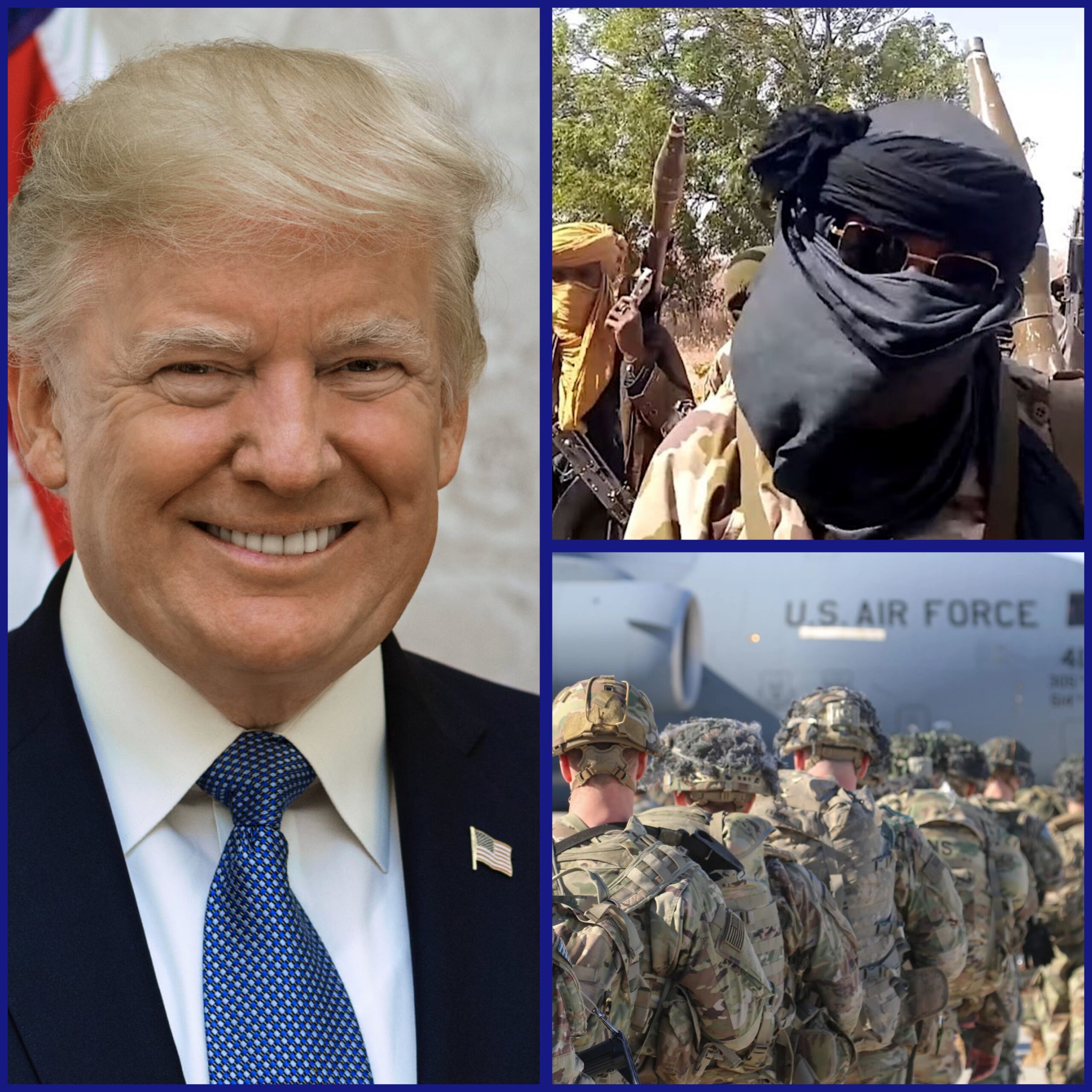
In a significant development in international security cooperation, the United States has confirmed the deployment of a small contingent of troops to Nigeria. This marks the first officially acknowledged presence of U.S. military personnel on Nigerian soil since American airstrikes targeted Islamic State-linked militants in the region in December 2025.
According to U.S. Africa Command (AFRICOM), the deployment is the result of expanded bilateral discussions with the Nigerian government, aimed at strengthening joint counter-terrorism efforts.
The move signals a deepening of military partnership focused on combating persistent insurgent threats, notably from Boko Haram and the Islamic State West Africa Province (ISWAP), which continue to destabilize northeastern Nigeria and the wider Lake Chad Basin.While the precise number of personnel, their specific role, and mission details remain classified, U.S. officials have described the team’s objective as advisory and supportive in nature.
The deployment is framed as part of a capacity-building strategy to enhance the operational effectiveness of Nigerian security forces through training, intelligence sharing, and tactical coordination.This step follows a period of intensified engagement between Washington and Abuja, reflecting shared concerns over the expansion of extremist violence and its implications for regional stability.
The previous U.S. airstrikes in late 2025 demonstrated a willingness to conduct direct action against high-value targets. The current troop deployment, however, appears focused on a sustained, collaborative approach—empowering Nigerian forces to lead operations while benefiting from American expertise and resources.
For Nigeria, the presence of U.S. troops represents both a strategic endorsement and a sensitive domestic matter. It underscores international support for President Bola Tinubu’s security agenda but may also attract criticism from factions wary of foreign military presence on sovereign soil.Analysts view this development as a calibrated escalation in the transnational fight against terrorism in West Africa.
It reinforces the U.S. commitment to the region’s security architecture while testing the bounds of a partnership that must balance direct assistance with respect for national leadership. As both nations navigate this intensified alliance, the focus will remain on whether this collaboration can translate into tangible, lasting gains against the militant groups that have long challenged peace in the region.