

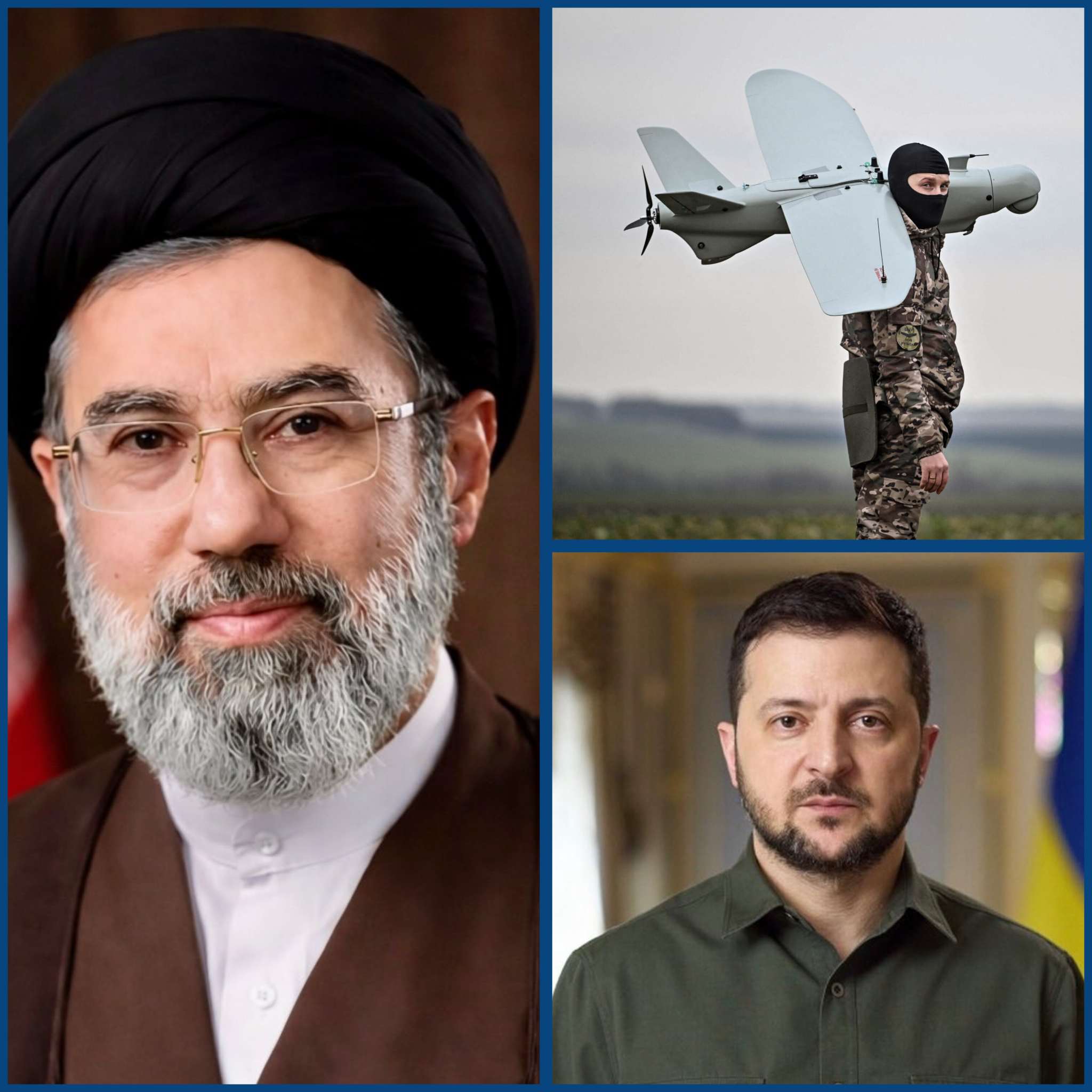
Iran has issued a stark warning to Ukraine, threatening that the country could become a “legitimate target” after accusing Kyiv of providing drone-related assistance to Israel amid escalating regional tensions.
The warning, delivered by a senior Iranian parliamentary official, dramatically expands the geographical scope of the ongoing conflict. Ebrahim Azizi, head of the Iranian parliament’s National Security and Foreign Policy Commission, took to social media platform X on March 14 to deliver the threat.
By providing drone support to the Israeli regime, failed Ukraine has effectively become involved in the war,” Azizi wrote. He further declared that under Article 51 of the United Nations Charter, Ukraine “has turned its entire territory into a legitimate target for Iran.
Article 51 of the UN Charter enshrines “the inherent right of states to individual or collective self-defense in the event of an armed attack” . Azizi did not provide specific evidence to support his claim that Ukraine is assisting Israel with drones.
Ukraine’s Response
Ukrainian officials have swiftly rejected the Iranian accusations. Foreign Ministry spokesman Heorhii Tykhyi described the claim as “absurd,” comparing it to “hearing a serial killer cite the criminal code to justify his crimes.
President Volodymyr Zelenskyy has been careful to frame Kyiv’s involvement as purely defensive. “This is not about being involved in operations. We are not at war with Iran,” Zelenskyy emphasized. “This is about protection and a thorough, complete assessment on our part of how to counter the Shaheds.
Ukraine’s Drone Expertise
The context for Ukraine’s involvement stems from its hard-won expertise in countering Iranian-designed drones. Since Russia’s full-scale invasion began in 2022, Moscow has fired more than 57,000 Shahed drones at Ukrainian targets, according to Ukraine’s Foreign Ministry.
Iran has supplied Russia with thousands of Shahed-type attack drones and shared technology that allowed Moscow to establish domestic production .Ukraine has developed innovative, low-cost methods to counter these threats. Kyiv now mass-produces interceptor drones priced at roughly $1,000 to $2,000—a fraction of the cost of traditional air defense missiles.
According to Ukraine’s Commander-in-Chief Oleksandr Syrskiy, interceptors shot down over 70% of Shahed-type drones targeting Kyiv and its surrounding region in February alone.
What Ukraine Is Doing in the Middle East
Zelenskyy confirmed that Ukraine has sent three teams of drone specialists to the Middle East, each consisting of dozens of personnel . The teams have been deployed to Qatar, the United Arab Emirates, Saudi Arabia, and a U.S. military base in Jordan.
Their mission involves conducting expert assessments and demonstrating how drone defenses should operate—essentially sharing battlefield-tested techniques for countering Iranian Shahed drones with Gulf states that have found themselves under attack.
Gulf nations have expended large quantities of expensive air-defense missiles to intercept Iranian drones. The Shahed-136, which costs roughly $20,000 to $35,000 each, presents an asymmetric challenge when countered by interceptor missiles costing millions of dollars per shot. Ukraine’s expertise offers a more cost-effective approach.
What Ukraine Wants in Return
Zelenskyy has been transparent about Ukraine’s motivations. “Honestly, for us today, both the technology and the funding are important,” he told reporters.The Ukrainian leader has proposed an exchange: Kyiv’s drone-defense expertise and technology in return for advanced U.S. air defense systems and financial support.
Ukraine is particularly interested in acquiring PAC-2 and PAC-3 missiles for Patriot systems—munitions it desperately needs for its own defense against Russian missile and drone attacks.
Zelenskyy also revealed that Ukraine had sought a major drone cooperation deal with the United States worth an estimated $35-50 billion, but negotiations remain uncertain. “I wanted to sign a deal,” he said, expressing uncertainty about whether it would materialize.
U.S. Response
The Trump administration has offered mixed signals regarding Ukraine’s assistance. Initially, President Donald Trump said, “I’ll take any assistance from any country” . However, in a subsequent Fox News interview, Trump reversed course, stating: “We don’t need their help in drone defense. We know more about drones than anybody. We have the best drones in the world, actually.
Russian Involvement
The situation is further complicated by Russia’s position. Analysts suggest Moscow may be a “primary beneficiary” of the expanded conflict. The surge in oil prices, relaxation of U.S. curbs on Russian energy exports, and diversion of air defense munitions from Europe to the Middle East all potentially advantage Russia.
Zelenskyy has claimed that Russia continues to supply Iran with Shahed drones for use against U.S. and Israeli targets, calling it “100 percent fact.
Looking Ahead
The threat against Ukraine comes as Israeli Prime Minister Benjamin Netanyahu reportedly seeks a meeting with Zelenskyy to discuss cooperation against Iranian drones, with both leaders expected to meet in the coming days .
For Ukraine, already fighting for its survival against Russian invasion, the Iranian threat adds a dangerous new dimension to an already complex security environment.
While Kyiv insists it is not at war with Tehran, Iran’s declaration suggests the lines between conflicts are increasingly blurring—with potentially far-reaching consequences for global stability.