

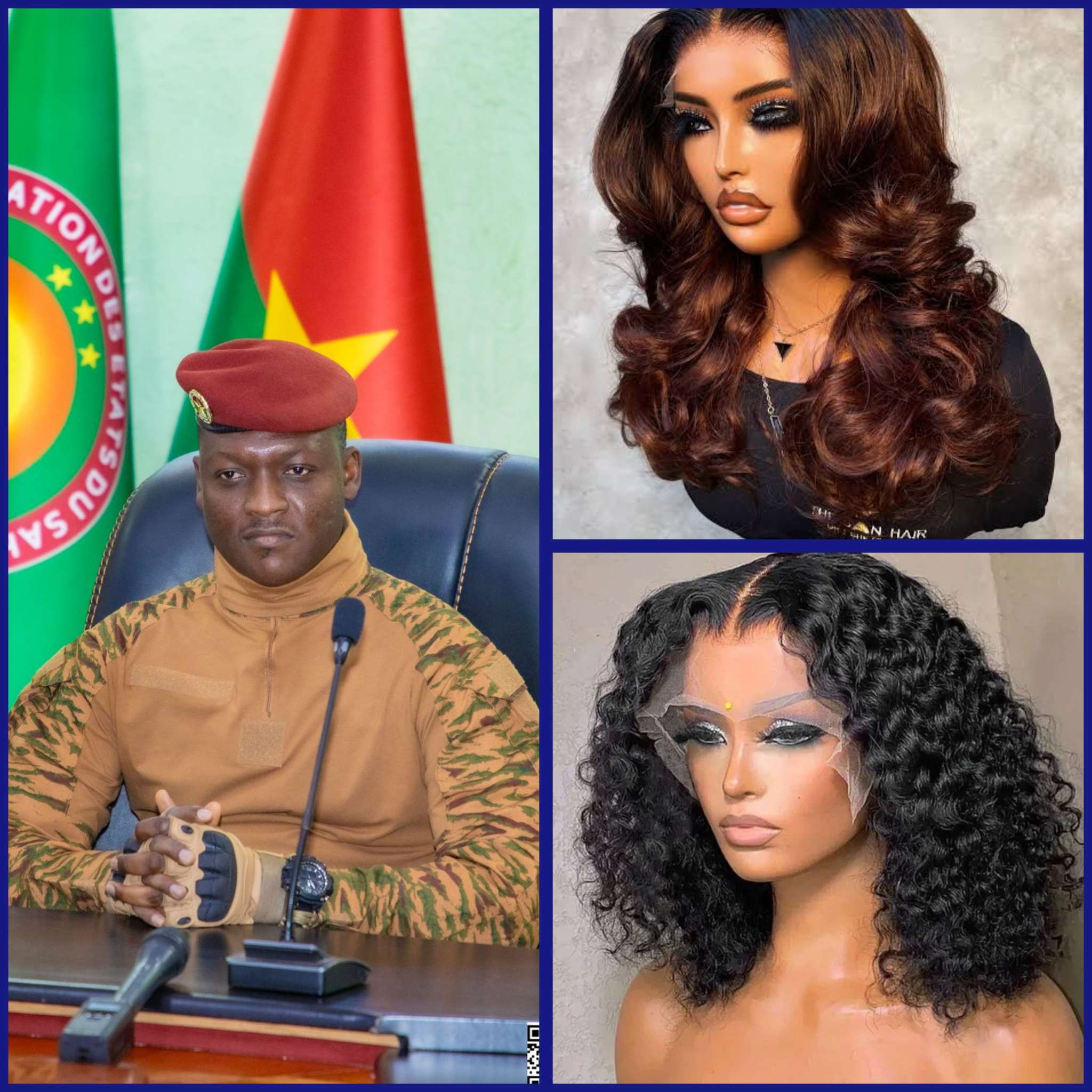
Burkina Faso’s Captain Ibrahim Traore bans artificial hair imports from Western nations, declaring Africa “not a museum” in a move for cultural sovereignty.
In a bold move intertwining cultural policy with national sovereignty, Burkina Faso’s transitional leader, Captain Ibrahim Traoré, has enacted a ban on the importation of artificial hair, commonly known as wigs, from Western nations.
The decree positions the measure not merely as an economic or regulatory shift, but as a firm statement against cultural mimicry and a call for African self-definition.
The ban, which directly targets a popular beauty accessory imported predominantly from Europe, America, and Asia, has ignited widespread debate. For supporters, it is a long-overdue corrective to a beauty economy that has historically devalued African aesthetics.
They argue that the billions spent annually on synthetic and human hair weaves represent a financial drain and a psychological concession to Eurocentric beauty standards. By restricting these imports, the government aims to stimulate local alternatives, potentially fostering a market for natural hair care products, traditional braiding arts, and locally manufactured accessories.
Captain Ibrahim Traoré’s reasoning, however, extended beyond economics into the philosophical. In defending the policy, he delivered a powerful rhetorical stance: “Africa is a continent, NOT a museum.
This statement frames the ban as a rejection of the continent being a passive showcase for foreign goods and ideas. It is a declaration that Africa must actively produce its own future and define its own norms, including those of beauty and personal presentation.
The move aligns with Traoré’s broader nationalist and pan-Africanist rhetoric, which has sought to distance Burkina Faso from its former colonial powers and assert its independent path.Critics of the ban, however, see it as an overreach into personal freedom and a misguided priority amid the country’s severe security and humanitarian crises.
They argue that it disproportionately affects women, particularly hairstylists and consumers in the informal beauty sector, potentially costing jobs and limiting individual expression. Some view it as a symbolic gesture that fails to address more pressing structural issues.
Regardless of perspective, the policy underscores a growing trend in some African nations to use legislative tools to reclaim cultural and economic space. It forces a complex conversation about globalization, autonomy, and identity. Is the wig a symbol of oppressive beauty standards or one of individual choice and global connectivity? Can a state effectively legislate cultural pride?
By enacting this ban, Captain Ibrahim Traoré’s administration has made a definitive, controversial stand. It asserts that true sovereignty must penetrate daily life, right down to the beauty salons, challenging citizens to consider where their notions of beauty originate and at what cost they are sustained.
The world now watches to see if this policy will empower a local industry as intended or become a case study in the challenges of legislating cultural identity.