

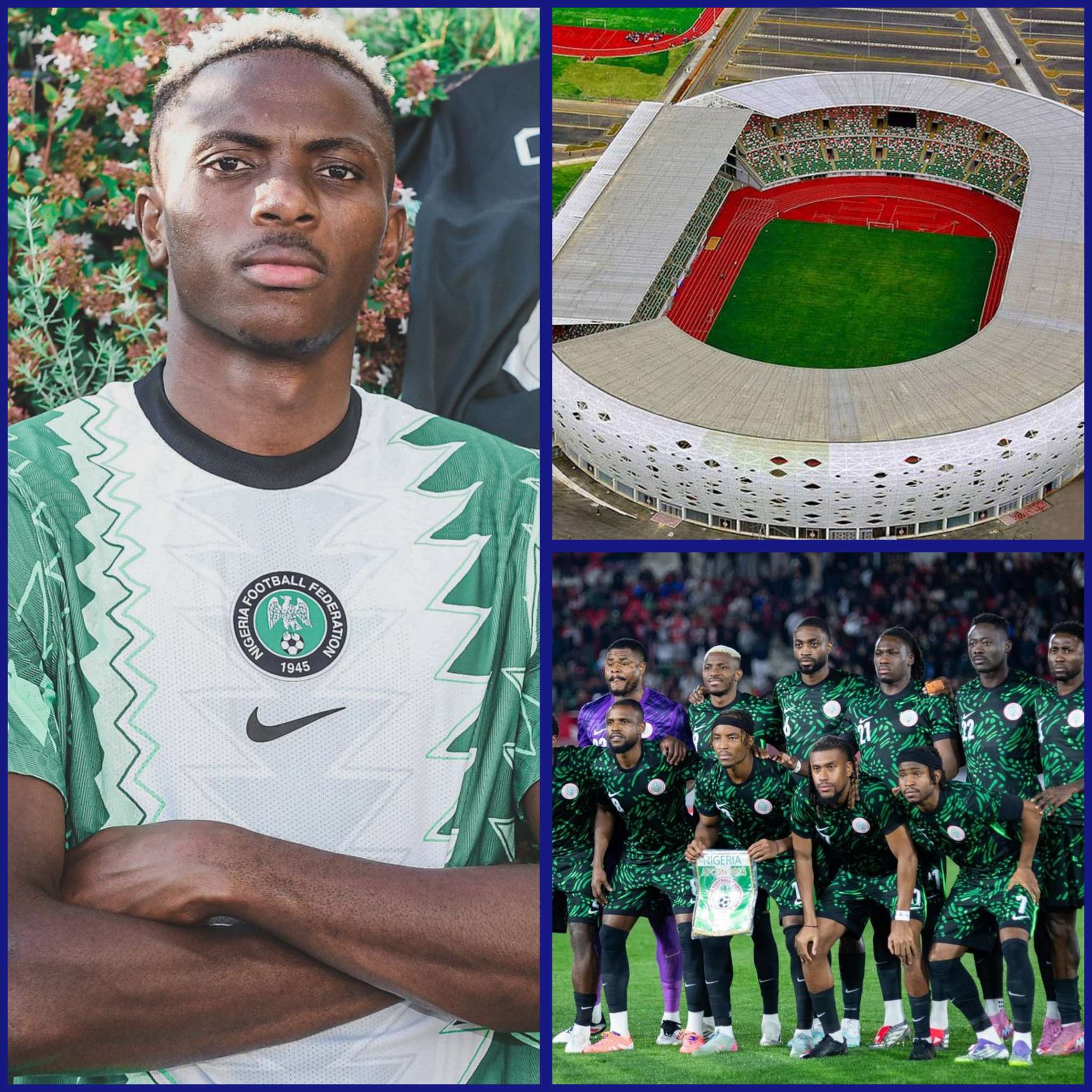
A growing sense of frustration is brewing among Nigeria’s Super Eagles star, with reports emerging that several key players, including Victor Osimhen, Alex Iwobi, Wilfred Ndidi, Ademola Lookman, and others are deeply disappointed after contributing a substantial sum of ₦1.2 billion ($750,000) to support renovation work at the Godswill Akpabio International Stadium in Uyo, only to see no visible progress months later.
The contributions, reportedly made following Nigeria’s Africa Cup of Nations qualifying match against Egypt, were intended to upgrade critical facilities at the stadium, which serves as one of the national team’s primary home venues.
According to sources close to the squad, the funds were earmarked for key infrastructure improvements including LED advertising boards, a modern scoreboard, upgraded floodlights, enhanced dressing rooms, and a complete overhaul of the playing pitch.
A Gesture of Patriotism
The players’ decision to pool their resources was seen at the time as a remarkable act of patriotism, a demonstration of the squad’s commitment to Nigerian football beyond their performances on the pitch.
For a team often criticized for perceived disconnection from local football realities, the gesture was widely praised as a bridge between the national team’s success and the infrastructure needed to sustain it.
Sources indicate the contributions came directly from the players’ pockets, with senior squad members taking the lead in organizing the initiative. The total sum, reportedly around $750,000 (₦1.2 billion), represented a significant collective investment in the country’s sporting infrastructure.
Months of Silence
Following the contribution, expectations ran high that work would commence swiftly on the stadium upgrades. However, multiple sources now claim that months have passed with no visible movement on the renovation project.
The players, who had hoped to return to a transformed facility for future international fixtures, are said to be increasingly frustrated by the lack of progress.”These players gave out of their own pockets because they care about Nigerian football,” a source close to the squad told reporters. They wanted to leave a legacy, to play on a pitch worthy of their talent and to give fans the kind of stadium experience they deserve. To see nothing happening after all this time is deeply disappointing.
The Stadium’s Significance
The Godswill Akpabio International Stadium, located in Uyo, Akwa Ibom State, has become a favored home venue for the Super Eagles in recent years. Known for its passionate crowds and relatively good playing surface compared to other Nigerian stadiums, it has hosted numerous crucial international fixtures, including World Cup qualifiers and Africa Cup of Nations matches.
However, like many Nigerian stadiums, it has faced ongoing maintenance challenges. Floodlight failures, pitch deterioration, and outdated facilities have occasionally marred the match-day experience for both players and fans. The players’ initiative was seen as an opportunity to address these issues through direct action.
Questions of Accountability
The reports have reignited broader questions about accountability and project implementation in Nigeria’s sports infrastructure sector. While the funds were reportedly channeled through the state government with Akwa Ibom State being a key partner in maintaining the stadium, the lack of visible progress has raised concerns about the stewardship of the players’ contribution.
Neither the Akwa Ibom State Government nor the Nigeria Football Federation has issued an official statement addressing the reports. Attempts to reach officials for comment on the status of the renovation project were unsuccessful as of press time.
A Pattern of Disillusionment
If confirmed, the situation threatens to deepen a sense of disillusionment that has occasionally surfaced between Nigeria’s top players and the country’s football administration.
While the current squad has generally enjoyed a positive relationship with the Nigeria Football Federation, stories of abandoned promises, unfulfilled commitments, and misdirected resources have historically tested that relationship.
The players’ willingness to contribute their own money represented a level of trust that many hoped would be honored with swift action. Its apparent absence could have lasting implications for how future collaborations between players and authorities are viewed.
What Comes Next
It remains unclear whether the players will make formal inquiries about the status of the funds or take further action to ensure the renovations proceed as intended. Some sources suggest that senior squad members are waiting to see if progress materializes before deciding on next steps.
For now, the situation appears to be one of quiet frustration rather than open confrontation. But for a team preparing for upcoming international fixtures—including World Cup qualifiers—the last thing needed is a distraction over stadium upgrades that were supposed to be a source of pride, not disappointment.
A Legacy Unfulfilled
The Super Eagles have often spoken about building a legacy beyond results, leaving Nigerian football stronger than they found it. The stadium renovation initiative was a tangible expression of that vision. If the work never happens, the legacy will be not of infrastructure improved, but of goodwill squandered.For now, the players wait.
The pitch in Uyo remains unchanged. The floodlights, scoreboard, and dressing rooms await upgrades that were promised months ago. And Nigerian football is left to wonder: what happens when those who give most generously receive least in return?