

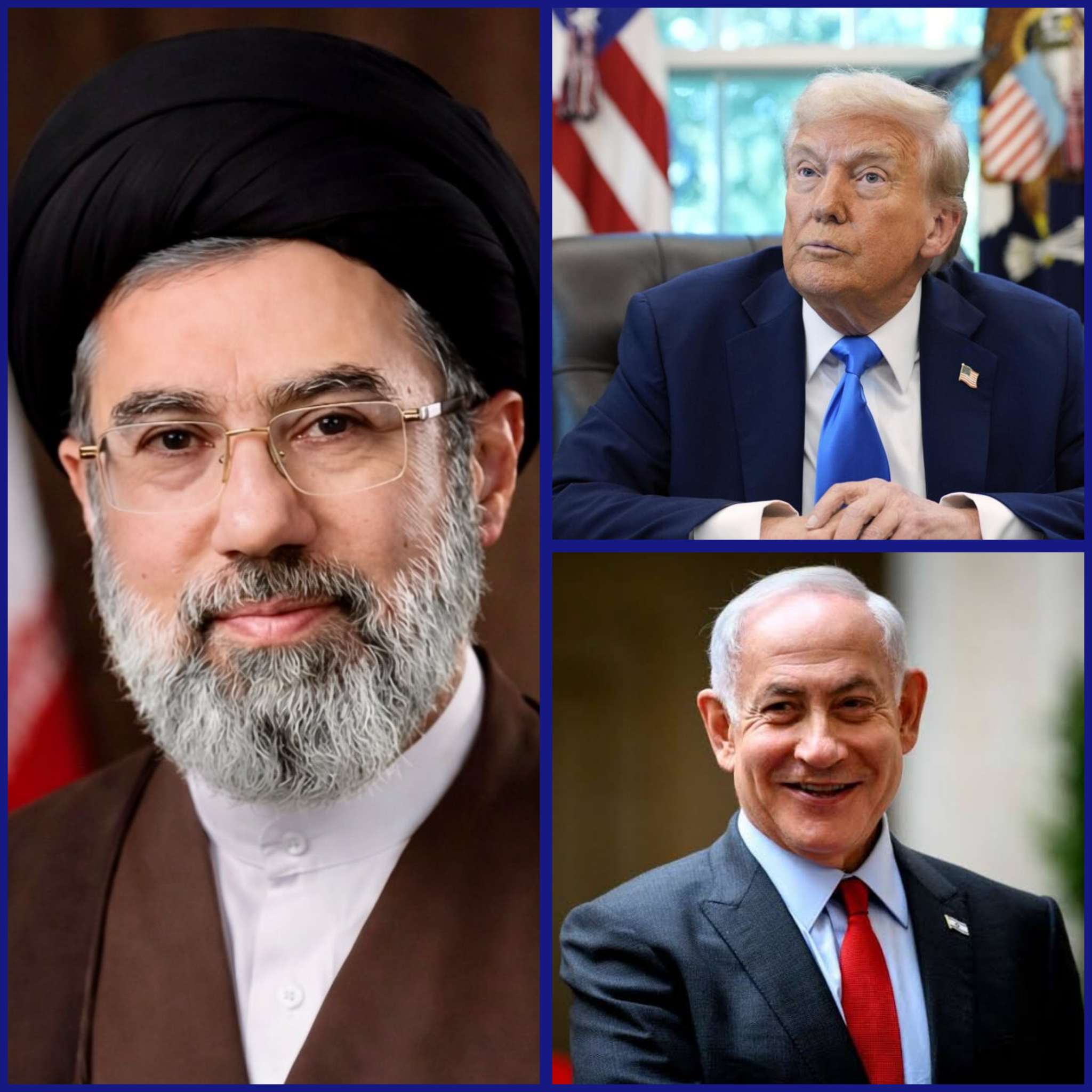
Iran’s newly appointed Supreme Leader, Mojtaba Khamenei, has delivered a resounding rejection of international peace efforts, declaring that now is “not the right time for peace” and insisting that the United States and Israel must first be defeated before any negotiations can take place regarding iran.
The hardline stance, articulated during Khamenei’s first foreign policy session since assuming the leadership role, represents a significant escalation in rhetoric and signals Tehran’s determination to continue military operations rather than pursue immediate diplomatic solutions.
According to a senior iranian official who spoke on condition of anonymity, Khamenei’s position on retaliation against the US and Israel was “very tough and serious. The supreme leader firmly rejected de-escalation proposals that had been conveyed to Tehran through intermediary countries via the Foreign Ministry.
Khamenei’s response was unequivocal: it was not “the right time for peace until the United States and Israel are brought to their knees, accept defeat, and pay compensation.
The statement leaves little room for diplomatic maneuvering and suggests Iran is prepared for a prolonged confrontation.This hardline position comes after the US and Israel launched joint strikes on Tehran and other Iranian cities on February 28, 2026, killing former Supreme Leader Ayatollah Ali Khamenei, senior military commanders, and civilians. Iran has responded with waves of missile and drone attacks on Israel and US bases across the Middle East .
The appointment of Mojtaba Khamenei, the 56-year-old son of the slain leader, was swiftly approved by Iran’s 88-member Assembly of Experts, signaling continuity for the theocratic establishment that has ruled since the 1979 Islamic revolution .
The Islamic Revolutionary Guard Corps (IRGC) was among the first to pledge allegiance, declaring its forces prepared to “fully obey and sacrifice for the divine commands” of the new leader .Analysts view Khamenei’s ascension as locking hardliners firmly in control in Tehran.
According to Alex Vatanka, a senior fellow at the Middle East Institute, the choice represents “a direct rebuke to US President Donald Trump,” who had declared the son “unacceptable” as Iran’s next leader. It’s a big humiliation for the United States to carry out an operation of this scale, risk so much, and end up killing an 86-year-old man, only to have him replaced by his hardline son,” Vatanka observed .
A senior official in the region told Reuters that Khamenei’s appointment puts Iran on an inevitable path of further confrontation. “Mojtaba will have no choice but to show an iron fist. even if the war ends, there will be severe internal repression,” the official said.
The assessment aligns with views from other regional observers. A Gulf source familiar with regional government thinking noted that the choice of Khamenei “tells Trump and Washington that Iran will not back down, they will fight on until the finish.
The US State Department had earlier expressed skepticism about the succession process, with officials describing the situation as “fluid” and noting that no official confirmation had been received from Tehran.
However, subsequent statements from Iranian state media confirmed the Assembly of Experts had reached a consensus on Mojtaba Khamenei’s appointment.
The supreme leader’s rejection of peace talks aligns with statements from other Iranian officials. Foreign Minister Seyed Abbas Araghchi has similarly dismissed US claims that Tehran sought a ceasefire, calling such assertions “delusional.
When we say we do not want a ceasefire, it is not because we seek to continue the war,” Araghchi explained at a news conference in Tehran. “It is because this time the war must end in a way that the enemies never think of repeating the attacks.
Araghchi accused Iran’s adversaries of attempting to force the country into “unconditional surrender” after mobilizing their full capabilities . He added that Iran’s opponents, more than two weeks into the conflict, were now seeking help from countries they once considered hostile and calling for international assistance to secure shipping in the Strait of Hormuz .
In his first public statement since assuming leadership, which was read on Iranian state television by a news anchor, Khamenei made clear that the vital global artery of the Strait of Hormuz would continue to be closed to pressure Iran’s enemies .
He added that all US bases in the region should be immediately closed or will be attacked .The strategic waterway remains largely closed off, with US allies rebuffing President Trump’s request for help to reopen the critical shipping lane, raising energy prices and fueling fears of inflation. Iran restricts passage only for enemies and their allies involved in the conflict.
The conflict has already drawn in multiple actors and carries significant risks of broader escalation. European countries are reportedly exploring diplomatic options to prevent a prolonged disruption to global energy flows.
French President Emmanuel Macron has warned that the escalation risks dragging the entire Middle East into chaos with long-term consequences .Stefan Wolff, professor of international security at the University of Birmingham, cautioned that most European countries are trying to avoid becoming directly involved in the war.
The best thing that European governments can do is exercise caution so that they do not get drawn into the war – that they do not become co-belligerents,” he advised.
Paul Salem, a senior fellow at the Middle East Institute, characterized Khamenei’s appointment as a predictable outcome given the circumstances. Nobody emerging now is going to be able to compromise,” Salem said. “This is a hardline choice, made in a hardline moment.
The new supreme leader faces immediate existential threats. US officials have suggested he may have been injured in the strikes that killed his father, with Defense Secretary Pete Hegseth claiming Khamenei “is wounded and likely disfigured” . No new images have been released of him since his selection over a week ago .
President Trump has previously warned that Iran’s new leader may be targeted and killed like his father. “I don’t know if it’s going to last. I think they made a mistake,” Trump said. As the conflict enters its third week with no end in sight, Khamenei’s defiant stance ensures that the region remains on a knife’s edge.
For the millions of civilians caught between shifting front lines and targeted strikes, the prospect of peace appears increasingly distant. As one regional official observed, the “war routine” threatens to become a long-term reality for the Middle East .