

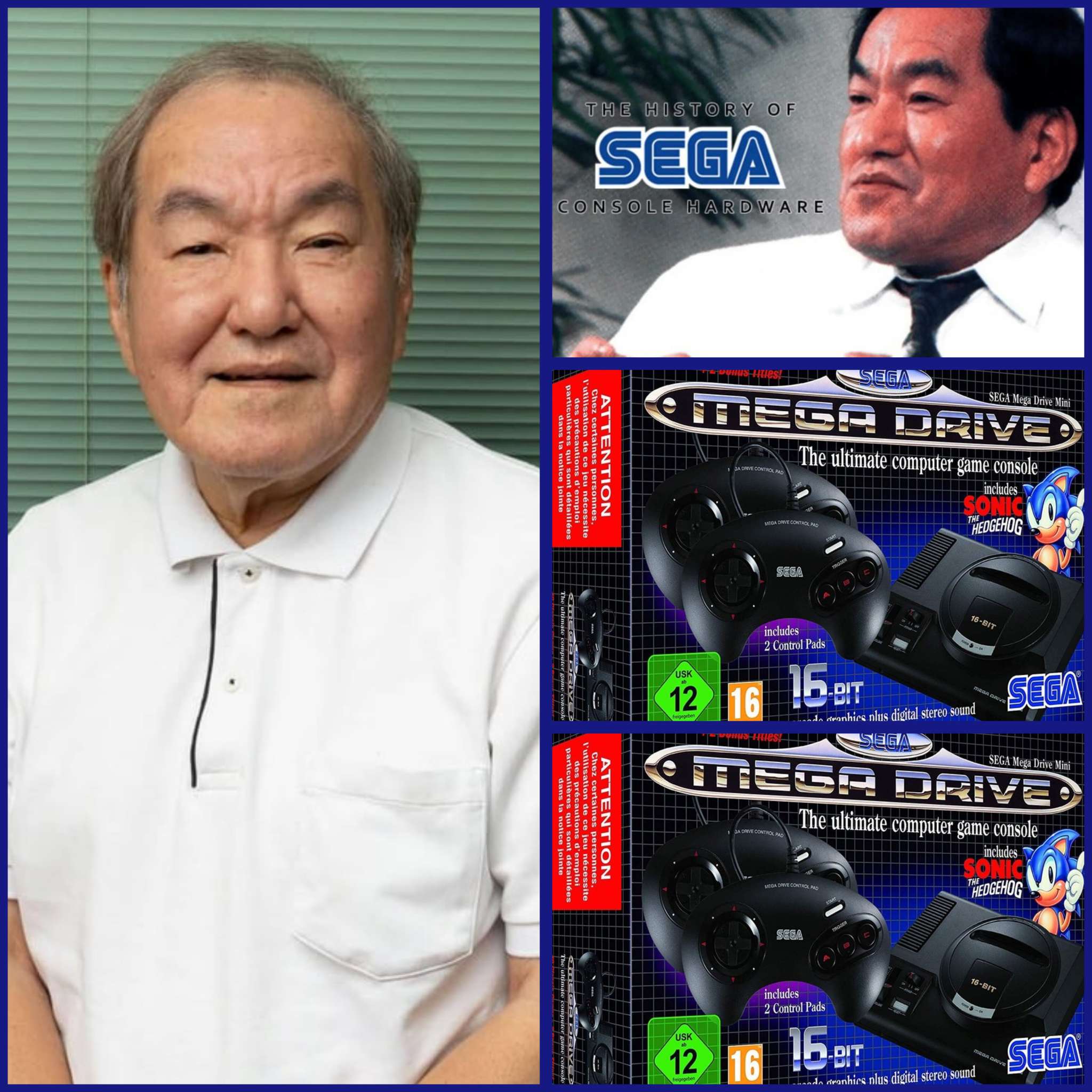
The video game industry has lost one of its most influential behind-the-scenes architects. Hideki Sato, the longtime SEGA executive who played a pivotal role in developing nearly every major SEGA console from the Master System to the Dreamcast, has passed away at the age of 77.
Sato’s death, confirmed by industry sources, marks the end of an era for the company that once stood as Nintendo’s fiercest rival. As a hardware engineer and later as president of SEGA’s consumer division, Sato’s fingerprints were on the silicon that powered countless childhood memories across the globe.
His career at SEGA spanned the company’s most ambitious period. Sato was instrumental in the development of the Mega Drive (Genesis), the console that brought arcade-quality experiences into living rooms and gave SEGA its iconic “Genesis does what Nintendon’t” swagger.
He later oversaw the creation of the SEGA Saturn, a complex dual-processor machine that, while commercially challenging, demonstrated SEGA’s willingness to push technical boundaries.
Perhaps his most significant contribution came with the Dreamcast. Sato led the hardware development for what many still consider a console ahead of its time, the first to feature a built-in modem for online play, pioneering features that would become industry standards years later.
Though the Dreamcast would be SEGA’s final console, its innovative spirit cemented Sato’s reputation as a forward-thinking engineer.What distinguished Sato was his holistic approach to hardware.
Unlike pure technicians who designed in isolation, he understood that consoles existed to serve games. Under his leadership, SEGA’s hardware divisions worked closely with software teams to create machines capable of delivering the arcade experiences that defined the company’s identity.
The SEGA Saturn, for all its commercial struggles, showcased Sato’s willingness to take risks. Its dual-CPU architecture was notoriously difficult to program for—a fact that frustrated developers but it demonstrated SEGA’s commitment to raw power over ease of development.
The Dreamcast refined this philosophy, balancing innovation with accessibility in ways that presaged modern console design.Sato’s influence extended beyond hardware specifications. As an executive, he navigated SEGA through intensely competitive periods, from the 16-bit wars against Nintendo to the company’s eventual transition from hardware manufacturer to third-party publisher.
His steady hand during turbulent times helped preserve SEGA’s legacy even as its business model evolved.For gamers who grew up with SEGA’s machines, Sato’s passing carries deep resonance.
The distinctive sound of a Mega Drive booting up, the hum of a Dreamcast reading a GD-ROM, the satisfaction of a Saturn controller in hand—these sensory memories exist because of Sato’s engineering vision.
Industry veterans have begun sharing tributes, recalling Sato’s quiet dedication and technical brilliance. Unlike the flamboyant marketing executives who gave SEGA its rebellious public face, Sato worked in the background, translating ambition into silicon. He was the engineer who made the marketing promises technically possible.
Today’s gaming landscape owes Sato an unspoken debt. Every console that pushes technical boundaries, every system that prioritizes online connectivity, every hardware platform that balances power with accessibility—all trace lineage back to the machines Sato helped create.
As SEGA continues its second act as a third-party publisher and purveyor of nostalgia through mini-consoles and game compilations, Sato’s original creations remain the foundation of that goodwill. The Mega Drive Mini, the endless streams of retro gaming content, the warm glow of SEGA Forever—all rest on hardware he helped bring to life.
Hideki Sato may not be a household name like Shigeru Miyamoto or Yuji Naka, but within the industry and among hardware enthusiasts, his contributions are legendary. He helped shape the physical objects that delivered digital dreams.May his legacy continue to load, boot, and play forever.